Election 2012 and the white minority (and Bill O’Reilly)

In many ways, elections are in the same vein as census results for the historian: they are snapshots of the U.S. population taken at regular intervals whose results lend themselves to nearly infinite analysis and extrapolation. The 2012 election is particularly rich, as it seems to show—

—women voting for Democrats and men voting for Republicans

—such sex-based voting trumping other demographic factors (race, income, immigration status, rural/urban, religion, education level, etc.)

—the older vote (45 and over) going Republican (as it has trended for about three decades) and,

—white votes becoming a smaller bloc

That is the way it’s being presented, at least: whites are becoming the minority population, and so the “white vote” is no longer critical to those running for office. But it’s more complicated than that; race is actually not the primary characteristic to count votes by. The best case to be made from the 2012 results, it seems, is that your sex matters most, as the majority of women of all races, incomes, etc., voted Democratic and the majority of men voted Republican. Age might come second, as people 18-45 vote Democratic and those 45-over vote Republican. Your job is up there, too, as union members voted pretty solidly Democratic.

It is true that White Americans will be in the Minority by 2019, and that our youngest populations in the U.S. are already minority white. But more important is that as our national population becomes more racially mixed, race is less of a card to play either way for a candidate—appealing to a certain race does not yield big rewards. Those who felt sure whites would vote for Romney were wrong when it came to women and the young, and right when it came to men and the elderly. Those who felt sure that blacks would vote for Obama were more right, but he is our first black president, and that’s a factor (he won 70% of the Latino vote as well). In 50 years, after (one hopes) a few more black and a couple of female presidents, a non-white presidential candidate will not be so new, and will have to fight for non-white votes.

The interesting point here is that race is just one factor, and “the white vote” does not mean “white people” but “white, older men”, the small group for whom race may be the primary factor in an election. But race is just one in a string of adjectives candidates need to pay attention to now, along with age, income, education, location, religion, sexuality, and others.

And so Bill O’Reilly, the Fox News analyst, is wrong when he pins the election on race. In his instantly infamous stream of consciousness monologue on election night, he stated:

“It’s a changing country. The demographics are changing. It’s not a traditional America any more. And there are 50% of the voting public who want stuff. They want things. And who is going to give them things? President Obama. He knows it and he ran on it. And, whereby twenty years ago, President Obama would have been roundly defeated by an establishment candidate like Mitt Romney. The white establishment is now the minority. And the voters, many of them, feel that the economic system is stacked against them and they want stuff. You are going to see a tremendous Hispanic vote for President Obama, overwhelming black vote for President Obama. And women will probably break President Obama’s way. People feel that they are entitled to things and which candidate, between the two, is going to give them things?”

In our next post we’ll do a close reading of this text, as historians do, to get at the heart of its inaccuracies. For now, we leave feeling some relief, perhaps, that race is no longer the be-all and end-all of election politics, and our diverse society is reflected more completely in its diversity of makeup than in previous elections.
Next time:  here’s your stuff

Debating the causes of the Civil War

The last post in our consideration of Michael Woods’ article, “What Twenty-First-Century Historians have said about the Causes of Disunion: A Civil War Sesquicentennial Review of the Recent Literature”, in the lastest issue of the Journal of American History (published by the Organization of American Historians), takes us to a conclusion of sorts about Civil War scholarship in this century. (Read it quickly; very soon it will be displaced by election result analysis!)

It seems the story of almost every historical field in the past few decades is one of adding complexity to the existing analysis. For the topic of causes of the Civil War, this means complicating our understanding of northern and southern attitudes toward slavery, and rehabilitating the idea that slavery was, indeed, the cause of the war. Slavery was behind the tariff debates, the westward expansion debates, the states’ rights debates, and the debates over industrializing the economy, immigration, monetary policy, and just about everything else one can think of.

This does not mean that abolition, the morality of slavery, or the rights of black people were always discussed in these debates. Slavery was not always discussed in its own context—that is, in the context of an argument about whether it was morally right or morally wrong to enslave human beings.  Slavery was often discussed as an economic, social, or political concept; a system that influenced other systems. Its human face, the actual condition of enslaved people, would not take center stage on a regular basis until the 1850s, and even on the eve of the war over slavery the situation of slaves was not as popular a topic for many Americans as the situations of white people living with black enslavement.

But that minority of Americans who focused on the  moral wrong of slavery grew to become the majority population during the war, and even after the failure/sabotaging of Reconstruction, it was never acceptable to question whether slavery had been right or wrong; the stance that slavery was a moral good, once a safe stance to take in public, became the last resort of racists who hid behind white sheets and terror societies.

Looking into recent scholarship on the Civil War is rewarding, as it shows that new understandings can come into view even for the most exhaustively studied topics.

Slavery: tough on white Americans

Hello and welcome to part 5 of our series on Michael Woods’ article  “What Twenty-First-Century Historians have said about the Causes of Disunion: A Civil War Sesquicentennial Review of the Recent Literature”, in the latest issue of the Journal of American History (published by the Organization of American Historians). Here we look at ways today’s historians are approaching the convoluted politics of race and slavery in the U.S. before the Civil War, and the insights into the many reasons why white antislaveryites opposed slavery—many of which were about protecting their own interests.

How was slavery a threat to white Americans, as they saw it? Here are the bullets:

  • Slavery as a threat to white jobs: Remember our distinction between abolitionists, who believed slavery was a moral wrong, and antislaveryites, whose problem with slavery was that it took jobs from white Americans and threatened our democratic political system. Antislaveryites did not want slave labor spreading through the country, taking jobs away from the white laboring classes and giving a fractional minority of white slaveholders far more power than they were due in Washington. This takes us to point 2—
  • Slavery as a threat to republicanism: If a handful of plutocrat southern slaveholders controlled most of the U.S. economy through the labor of their enslaved people, they would become “too big to fail” in Congress, and their demands would dictate U.S. policy. This was a threat to republican liberty that was not fantasy, as the south, though the smaller section, lost very few battles in Washington, and often had the federal government bending over backward to placate it. So slavery was a threat to the poor white worker and the white nation as a whole. Sectional conflicts like Bleeding Kansas can be read as “a struggle to secure the political liberties of whites” —the whites who voted to make Kansas a free state, who were threatened literally and figuratively by proslaveryites who killed settlers and overrode the antislavery constitution of the territory to present their proslavery constitution to the proslavery president James Buchanan, who accepted it. [Woods 432]
  • Slavery as a threat to white liberty: the 1854 Fugitive Slave Law was only the boldest and latest move of the slave power to not only steal liberty from enslaved people who escaped to freedom, but to encroach on white liberty itself. Whites were forced by the law to help slavecatchers, they were fined and jailed for failing to do so, or for helping an escapee, and whites were forced to live with the rescinding of the personal liberty laws they had voted for on a state level. If the Fugitive Slave Law was all about black slaves, why was it fining, jailing, and threatening free whites? Why did it seem to focus on attacking the liberties of northern white citizens as much as it did on preventing black Americans from gaining liberty? It was just another example of the slave power perverting democracy and threatening free government.
  • Slavery as a perverting force on white nature: northerners who read about the inhuman abuses slaveholders inflicted on black Americans, and read proslavery politicians’ own forceful defenses of violence against the enslaved, and read about or saw for themselves the aristocratic lifestyle of major slaveholders, were disgusted at what slaveholding seemed to do to white nature. Slaveholders were not tough, hardworking, honest men, as whites were supposed to be, but lazy and corrupted by power, living lives of ease that made them effeminate and shallow. Slavery had led to the development of a chivalric code that emphasized violence in defense of one’s honor, but no exertions of body or spirit in any other direction. And, as we’ve seen, slaveholding had led wealthy slaveholders to pervert American democracy itself to protect and extend their twisted way of life. Antislavery emotion in the north often called on its followers to counter this perversion of whiteness, and the free soil, free labor ideology (of free, honest, hardworking, muscular farmers) was a direct counterpart to the depraved planter.
  • Slavery as a wedge into the white race: this is directly related to the point above. Rich white slaveholders had long prevented poor southern whites from rising up against their oligarchy by focusing on race instead of class. Don’t focus on how unequal you are to us in every respect, they told poor whites; focus on how superior we all are to blacks. Even the poorest, least educated white man is better than a black man. Focusing the poor white majority on racial solidarity rather than class inequality preserved the unequal social and political system in the south and shored up slavery. Since the vast majority of white southerners did not hold slaves, and had nothing in common with slaveholders, how was it that they were willing to fight a war for slavery? This question has been asked by Confederate apologists for over a century, and had a featured role in Ken Burns’ The Civil War. The answer, that poor white southerners wouldn’t have fought to defend slavery, is used to “prove” the point that the war was not fought over slavery and that southerners were fighting for states’ rights. But the real answer is that poor whites fought the war for many reasons, but one was because rich whites asked them to, and fought alongside them, in a living illustration of the bond of race. Poor southerners, like any human beings, were not about to allow “foreigners” from the north invade their homes and farms without raising a finger to stop them simply because those poor southerners didn’t hold slaves. Poor southerners fought to protect their lands and families. But during and especially after the war, rich southerners put a gloss on that that made the war about whites joining together to fight for white superiority. The horrid backlash against southern blacks after the war sprang in large part from poor whites’ fury at having their racial superiority taken from them, and to prevent blacks from achieving true equality with them. So the white racial “bonding” over slavery was seen by northern whites as another perversion of white identity brought on by slaveholders.

We see from this survey one of the main points of recent scholarship: bringing slavery back to its central role in provoking the Civil War. In the latter part of the 20th century, slavery was de-emphasized as a cause of war, in part because studies focusing on northern racism came to the fore at that time, and the logic ran that if everyone was racist then slavery couldn’t have started the war. This point of view had been popular with southerners since 1865, as they went about the business of recasting the war as a noble fight for states’ rights that had nothing to do with slavery. It caught on with a new generation of non-white scholars who felt white historians gave the north too much credit in saying it fought the war over slavery. This was a necessary correction to the super-noble representation of northern feeling popular in the north since 1863. But as research continues, we begin to see a more complete and complex picture of the truth: slavery was the only issue leading to war, but not just because of its immorality—as Woods points out, “Some forty years ago, Larry Gara urged historians to make a ‘crucial distinction’ between self-interested opposition to slaveholder power and moral opposition to slavery as an oppressive institution.” [Woods 431] But whether you were against slavery because it was cruel or because you felt it robbed you of a job, slavery was your issue going into the war, and, as Woods points out, few people were so black-and-white about the issue. People felt a range of sometimes contradictory emotions about slavery, and those feeling grew and changed during the war. Recognizing human complexity in any field is crucial to truly understanding it.

Next time: still fighting over slavery

Northern Sectionalism before the Civil War

In part 4 of our look at trends in 21st-century Civil War scholarship, we look at the new attention being paid to northern sectionalism. This post, like the others in this series, are informed by Michael Woods’ very interesting article in the lastest issue of the Journal of American History (published by the Organization of American Historians) called “What Twenty-First-Century Historians have said about the Causes of Disunion: A Civil War Sesquicentennial Review of the Recent Literature.”

We tend to learn that in the years before the Civil War, the south became increasingly divided from the rest of the nation, and that southern sectionalism was basically defined by proslavery politics and devotion to a chivalric social ideal and an agrarian economy. This is presented in contrast to the north, which was simply the United States as it had always been, unchanged before the war, unchanging during the war, and triumphantly reimposed on the south after the war. “The North” and “the Union” are used interchangeably by most texts.

But recent scholarship has focused on the north’s own sectionalism—its departure from traditional United States ideas and practices, which was prompted in large part by and was a reaction to southern sectionalism. As the south defined itself as a region, so the north began to define itself as a region, one that was morally and economically superior to the south [Woods 427]

Here are some facets of northern sectionalism:

Free labor, free soil sentiment: As the south pressed a proslavery agenda, the north began to develop a free labor agenda. Neither agenda was original to the founding of the U.S. or its politics and economy until the rise of sectionalism. The U.S. was founded on a mix of free and slave labor. But the north responded to southern proslavery by developing a cult around free labor—the image of the independent, strong, self-sufficient yeoman laborer, be he farmer or industrial worker, who supports his family by the honest labor of his body. Free labor, the north opined, was wholesome and manly, and invigorated the entire nation. This went beyond opposing slavery; many people who opposed slavery did not buy into this romanticized vision of labor, realizing that factory workers had little control over their wages, worked in unsafe conditions for far too many hours, and were actually made up of women and children as well as men. They also knew that farming did not always repay honest labor, being at the mercy of the weather, and, later, railroad shipping costs. But the romance of free labor was a defining feature of northern sectionalism, opposed as it was to slave labor, of course, but also to lazy, weak, effeminate slaveholders who profited from the labor of others.

Manufacturing: The U.S. was not founded on manufacturing. Like all nations at that time, its economy was predominately agricultural. But in the decades leading up to the Civil War, the north identified itself as a manufacturing economy—a modern, exciting, powerful economy of the future that provided a living for unskilled workers and uneducated immigrants and grew the wealth of society as a whole. Again, the reality of dangerous working conditions, exploitive hours, women and child laborers, and no rights for workers was overlooked by those pushing manufacturing as modern and uniquely northern. Southerners who argued that factory workers were basically slaves were ignored.

Disunionism: Like the south, the north had populations calling for civil war. Radical abolitionists declared that the United States was founded on the sin of slavery and could not be salvaged. It would have to be destroyed, and a new nation started from scratch. Like radical proslaveryites in the south, these northerners believed it was their region alone that could do this important work.

Recasting patriotism in its own image: Southern proslaveryites used U.S. founding documents, the Revolution, and hero-Founders like Jefferson to support their proslavery position, using all three to find quotes that supported their position. Thus proslavery southerners could claim to be the real Americans, fighting malevolent attempts to pervert the Constitution by ending slavery. This we learn early and often. But the north followed the same path, using the same three sources to prove that they were the real Americans. Antislavery northerners crafted a position that balancing slave with free states, and not extending slavery into the west, was the dream and purpose of the founders. Abolitionist northerners said that the War was meant to end slavery forever. Free labor northerners claimed that the south was perverting the principles of the nation by tying the economy to old-fashioned, agriculatural labor and halting the Manifest-Destiny possessing of the west. Whichever group you belonged to, you as a citizen of the northern section were the real American.

Woods sums this up well: “Together, recent studies of northern sectionalism and southern nationalism make a compelling case for why the Civil War broke out when it did. If the South was always a separatist minority, and if the North always defended the American way, secession might well have come long before 1861. It is more helpful to view the sectional conflict as one between equally authentic (not morally equivalent) strands of American nationalism grappling for the power to govern the entire country according to sectionally specific values.” [430]

Next time: slavery hurt white people the most   ?

The Peculiar Institution of Disunion

Wlecome to part 3 of our perusal of Michael Woods’ very interesting article in the latest issue of the Journal of American History (published by the Organization of American Historians) called “What Twenty-First-Century Historians have said about the Causes of Disunion: A Civil War Sesquicentennial Review of the Recent Literature.” Here we’re looking at how the depiction of disunion changed in the 1850s.

In earlier decades, going right back to 1787, any mention of disunion—of breaking up the United States through the secession of any of its member states—provoked real dismay and even horror. It was the threat of last resort, and anyone talking about breaking up the Union was reproached vehemently for even invoking the spectre of civil war. All sides of the slavery debate, from antislaveryites to aboilitionists to prosleveryites, lambasted any opponent who threatened disunion or accused that side of provoking it. Now, proslaveryites in the south often threatened disunion all the same, saying that northern states or the federal government were trying to kill slavery and thus invalidate the Consitution, and that they would rather leave the Union than remain in an adulterated, ruined version of the nation. Disunion here was still threatened as the ultimate evil, and those claiming they might be forced to leave the Union wasted no adjectives in describing the bloodshed and miscegenation that would follow if disunion were forced on the nation. So even as some southerners threatened disunion, they still painted it as an evil they would never willingly embrace, and predicted dire, dire consequences for all Americans if it ever came to pass.

But by 1850, the language began to change, and proslavery radicals began to shift southern public perception of secession and disunion. To set the stage, remember that Southerners immediately after the Revolution, when attacked for their hypocrisy in enslaving people after they had fought for a free republic, had made the case that of course slavery was evil but there was no way to get rid of it right away—it was a regrettable evil that had to be endured until it died away. But in the early decades of the 1800s, slaveholders began to shift that argument, gradually introducing the idea that slavery was not actually evil in nature, because it provided food and shelter and loving care to inferior peoples who could not function in educated society. It also kept those inferior peoples from making trouble in society. Slavery, over a few decades, changed from an unavoidable evil to a positive good. Slavery, from this new angle, was a terrific benefit to the enslaved that also encouraged slaveholders to be kind and loving protectors of the enslaved.

The same odious logic was now turned on disunion. Over the 1850s, secession was transformed by radicals from the worst nightmare that could befall the nation to a positive good. Disunion would preserve the slavery enabling Constitution. Disunion would create a new,  slaveholding American nation that lived up to the principles of the Founders completely. Disunion would leave the antislavery, abolitionist north a weak, isolated half-nation dangling over the abyss of worldwide scorn and shame—and economic collapse. Disunion would protect white southern homes, families, women, children, and race purity. Disunion, eventually, became one’s civic duty as a southerner/real American. Destroying the Union meant destroying the ties that bound the south to scheming, unAmerican northerners.

By the presidential election of 1860, much of the Deep South’s political leadership was ready for secession should necessity (Lincoln’s election) call for it, and the Upper South would be fairly easily persuadable by spring 1861. While most southern citizens did not want civil war, they too would be convinced that there was no alternative for the patriotic southerner.

Northerners up to the last moment before the war rolled their eyes in disgust at southern “bluffing” on secession. They still believed the south would never try to leave the Union, and used the old reproaches against disunion talk as the ultimate evil right up to First Bull Run. But they were no longer reaching their audience. This disconnect was the result, in part, of northern sectionalism, a phenomenon not often fully appreciated by Americans today, and the focus of our next post.

Next time: the North was a section, too

The coming of the Civil War: how disunion evolved over the decades

Welcome to part 2 of our perusal of Michael Woods’ very interesting article in the lastest issue of the Journal of American History (published by the Organization of American Historians) called “What Twenty-First-Century Historians have said about the Causes of Disunion: A Civil War Sesquicentennial Review of the Recent Literature.” Here we look at Elizabeth Varon’s book Disunion! The Coming of the American Civil War, 1789-1859 and her persusasive argument that cries of disunion evolved in interesting ways between 1789 and 1860.

Disunion, just to be clear, refers to states leaving the United States and, therefore, breaking up the Union. Disunion was a cry heard constantly in the decades in question in the U.S., and was synonymous with civil war.

We should also describe the sides that participated in disunion language. We tend to think there were people for slavery and people who wanted slavery to be abolished, but there were more sides than that. There were proslavery Americans who wanted slavery to remain protected by the Constitution; these split into some who thought slavery should not extend into the west (because this provoked antislavery protests) and those who thought it should. Then there were antislavery Americans who did not support abolishing slavery—slavery could still exist in the U.S.—they just wanted to keep it hemmed in in the southern states where it already existed and keep it out of the west. Antislavery people differed from proslavery Americans in that they did not claim that slavery was a terrific benefit for the enslaved and a mandate from God, as proslavery Americans did. Antislavery Americans would have liked to see slavery disappear but did not want the newly freed black Americans to stay in the country, and since there seemed to be no way to get rid of them all, were content to live with the status quo (which meant stopping the westward expansion of slavery).

Abolitionists wanted to get rid of slavery. They divided into immediatists, who wanted slavery ended immediately, by any means necessary, no matter what, and gradualists who wanted to wait until a good plan to deal with newly freed people could be agreed upon by all. Gradualists would have been happy with a state-by-state progress of states deciding to abolish slavery in their own good time. Immediatists would not accept this, and embraced charges that they would bring about a race war or, even worse in the eyes of proslavery supporters, interracial marriage by immediately freeing black Americans.

In her book Varon describes how each group described disunion over time as, variously,

—a prophecy: proslavery Americans predicted that antislaveryites and abolitionists were bringing about disunion with their attacks on slavery, while antislaveryites foresaw a future where proslaveryites had caused disunion. Prophecy disunion prevailed mostly in the early part of our 1789-1860 time period, when real civil war seemed very unlikely, and was referred to as part of a distant, dystopian future that could never come to pass.

—a threat: proslaveryites were constantly threatening to secede from the Union in response to perceived “attacks” on slavery. If the Constitution was going to be trampled, they said, then there was no valid Union to support. Antislavery Americans swung between fear at these threats and bored eye-rolling at the states who cried secession once too often. On the other hand, immediatist abolitionists in the 1830s began to make their own threats of disunion, saying that any Union that protected slavery was no Union and should be immediately destroyed and a new nation brought forth in true freedom. Angry accusations that they would bring about civil war were happily accepted by these immediatists. Threat disunion came on the scene in the 1820s with the Nullification Crisis and picked up steam after the Mexican Cession in 1848, which brought huge western lands under U.S. control and made the question of spreading slavery into the west the hottest issue of the day. Immediatists threatened disunion if slavery did go west, proslaveryites threatened it if slavery did not go west.

—an accusation: Each of the three sides accused the others of bringing about disunion with their radical talk or stubborn ways. Sometimes the accusation was that one side was unknowingly provoking disunion, sometimes that a side was deliberately and premeditatedly weakening the nation. Accusation, like threat language, picked up after the Mexican Cession as Americans battled fiercely to make the new western states slave or free, and John C. Calhoun’s “Southern Address” is a good example of this language.

—a process: Americans recognized that slavery was an issue carving out factions in the nation, and making the divide of regional sectionism more and more impassable. Whether they supported slavery or wanted it limited or abolished, all Americans saw that the process of debating slavery was creating a deadly us v. them mentality that could only lead to civil war. The process of arguing about slavery had made disunion nearly inevitable, and this was the feeling from the Cession on. Republican Senator William Seward’s “irrespressible conflict” speech is a classic example of process disunion language.

—a program: This was for those Americans, of all sides, who saw the wheels of disunion already in motion because of the evil actions of the other sides. Those who began to favor disunion (the immediatists and proslaveryites) promoted disunion processes as necessary and ultimately for the greater good of the new nation that would be formed once the old Union was torn apart. Program talk was also more common after the Cession and especially in the 1850s.

Next we’ll look at the ways the proslavery stance and its language changed over these decades.

Next time: from unavoidable evil to positive good

Child labor in the U.S. during the Industrial Revolution

Following up on our earlier post on child labor in the U.S. in the 19th and 20th centuries, we consider how any child who worked 12-hour days 6 days a week experiencing ungodly levels of air and noise pollution; financial, physical, and often sexual exploitation; fatigue, hunger, and illness or injury lived to tell the tale. What got children through this sort of life?

One leavening factor was that the child usually worked alongside family members. This meant the child worker could share food with someone, had company, and knew someone at work spoke and understood her language if she hadn’t learned English yet.  Another was that, as we described in the first post, most of these children expected to work like adults, and were proud of their ability to contribute to the family economy. They weren’t snatched from a happy childhood of school and play and thrown into the factory; they were born to work and in some sense could not fully miss what they never had.

But the most important factor in America was that child laborers and their families believed their days in the factory might be numbered—in America, land of opportunity, one could reasonably hope to work one’s way up from the factory floor. If a boy worked hard, learned English, and stayed alive, he could become the floor manager or boss. If he was really sharp, he could become a white-collar assistant manager. A girl hoped to work only until she got married—if she was smart and lucky, she might marry an overseer and retire to a life of non-factory work (working from home as a seamstress, laundress, or hat-maker, for example). If she was very lucky, she could marry one of those white-collar managers and never work again.

The promise of rising up, even entering the middle class, white-collar world after a relatively brief if truly hellish few years on the factory floor drove many child workers, and gave them the mental fortitude to make it through the factory work day. This was their parents’ hope, too. And even if a child worker never progressed past overseer, his own children might do better, and then a grandchild might end up going to school and being a doctor or lawyer. That was the promise that didn’t exist for most immigrants in their “old country”. American exacted a toll, but it offered a payoff.

Even children who labored without hope of their own advancement did it for a sibling; stories abound of siblings working slavishly to pay for one smart, usually younger brother to go to school and even college. If that one brother made it, he could relieve the sufferings of his whole family. Many a young girl worked tirelessly to give her brother a better life, and dreamed of the day his success would allow her retirement from the machine floor.

So there was a powerful psychological impetus for many of the children who worked in factories during this period, namely the belief that it would pay off one day and they would no longer have to work so hard, even if it was a brother or son who eventually made a life of relative leisure possible. That was the promise of America.

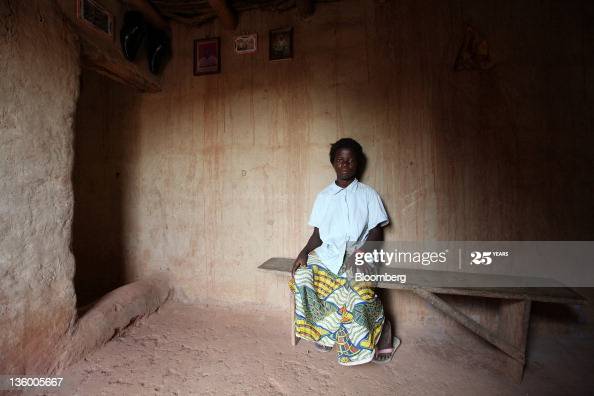
As we turn our throughts back to today’s child laborers, most of whom are basically enslaved in cotton fields or gold mines, we see there is no promise of a payoff of any kind motivating their labor—just fear and hopelessness. One story about the children who are enslaved to work in “fair trade” cotton fields in Burkina Faso we heard today actually made the claim that the farmers there who beat children almost to death for not picking enough cotton don’t know that that is wrong because “no one has told them it’s wrong”. We think Clarisse Kambire, shown here, knows that it’s wrong:

Clarisse Kambire
Clarisse Kambire, 13, a child laborer, poses for a photograph in the room where she sleeps in Benvar, Burkina Faso, on Friday, Nov. 11, 2011. In Burkina Faso, one of the poorest countries in the world, where child labor is endemic to the production of its chief crop export, paying lucrative premiums for organic and fair traden cotton has — perversely — created fresh incentives for exploitation. Photographer: Chris Ratcliffe/Bloomberg via Getty Images

And so we will state that it’s impossible that any adult could “not understand” the injustice of child labor, the inhumanity of child slave labor, and the crime of beating child workers. Bosses and plantation farmers in the U.S. in the 1800s knew it was wrong to exploit children; they just also knew that no one would stop them from exploiting those children, and therefore they did it. Everyone, everywhere, knows that this is wrong.  More power to those who are working around the world, and in the U.S., to try to stop child labor once and for all.

Taxation = Slavery

As always, when history is being made in the present, or the present is clearly marked in a historical cycle, we delve into it here on the HP.

In this case, it is the debate in Congress over whether to raise the debt ceiling or default. The main sticking point has been the refusal of a sizable minority of Republicans, mostly belonging to the Tea Party faction, to allow the federal government to collect tax revenue. This group demands tax breaks for the wealthy, including corporations, and the maintenance of tax loopholes that allow millions of dollars of tax revenue to go uncollected.

This is not the place to go into the details of their platform, or the response by moderate Republicans and Democrats. Here, the issue is the extreme instransigence of the Republican minority on the issue of taxation. It has become, to them, a crime for the government to raise taxes or even to collect taxes. To them, there is no compromise on taxation: you are either for it (and therefore un-American) or against it. Again, we’ll leave aside for this post the historical fallacy of anti-tax advocates calling themselves “Tea Party”; read about that here. For now, we’ll focus on the black-and-white issue they have turned taxation into. It’s hard to think of a time when Congress was so completely divided, so unwilling and unable to compromise on an issue; when you look back at our history, only one comparable time comes up—the slavery debates of the late 1850s.

You could not compromise on slavery during those Congresses. You were for it or against it, and this divide worked its way into many other, seemingly unrelated issues, and the uncompromisable issue of slavery could not be resolved. Congress could no longer function to govern the country, and civil war ensued at the 1860 election.

Today, Congress’ refusal to accept compromise on taxation is quite similar to the earlier Congress’ refusal to accept compromise on slavery. But there are two key differences: first, the American people were becoming just as divided over slavery as their representatives; second, slavery really is an issue you can’t seriously compromise on.

Americans in the 1850s didn’t want to fight a war over slavery, but they were rapidly becoming more polarized over it. Even those who didn’t particularly want abolition for morality’s sake blamed slavery for all of America’s ills, and would have gotten rid of it for economic or political reasons. Their representatives’ furor over slavery was not out of line, then, with Americans’ feelings about slavery. It does not seem accurate to make that claim today. Many Tea Party Congress members have said their constituents contacted them to say it’s okay to raise taxes to avoid default, but those members refused to do so out of principle. The extreme polarization in Congress today does not really have its roots in how Americans are feeling.

And taxation is not slavery. It’s not a black-and-white, moral issue that no one can take a moderate stance on. The government raises taxes in order to provide services. It’s a very simple and fundamental tenet of government. We have representation to our government to decide what services and how much taxation, not to stop the collection of tax revenue.

The taxation issue is part of a larger move to reduce the federal government to a negative function: the federal government will not provide social services (no Medicare, Social Security, Head Start, etc.), will not regulate business (protect the environment, police Wall Street, etc.), will not really legislate (instead, Constitutional Amendments will be put in place to handle social issues), amd will not extend civil rights to immigrants, gay people, etc. All it would do under this plan, apparently, is fund wars.

No one really wants to live in that world. It is undemocratic, and unself-sustaining. This experiment with such negative chaos is a dangerous one. The first experiment ended in civil war; it remains to be seen where we are headed in the next 20 years.

Tea Party, Health Care, “Reload”—the long view

We don’t usually get into current-day politics here at the HP, but when big-ticket history is being made, we have to mention it. Right now, the United States is in the midst of a long, rolling series of major changes that will make this present day of ours as deeply studied and debated by historians as the run-up to the Civil War or the civil rights movement.

Right now, the health care bill that passed Congress this month is causing an almost inexplicable torrent of rage amongst a small portion of Americans. These are the small minority of very vocal people who always want to stop the American experiment of accepting and driving social change (see The Great American Experiment), a reactionary fraction who always believe the past was better than the present and far better than the ominous future the latest social change is going to unleash.

In these times, it’s good to be a historian, because you have the long view. You know that there have always been these reactionary groups, ranging from the inane to the harmful. The “Know-Nothings” or American Party in the 1830s and 40s terrorized Catholic Americans and won many political seats on a platform of stopping immigration from undesirable countries, eradicating Catholicism, and generally setting up a police state run by white Protestants. In the late 1800s, groups like the Immigration Restriction League and the Workingmen’s Party authorized terror against immigrants; WP leader Dennis Kearney led his men on a rampage through San Francisco’s Chinatown in 1877, destroying homes and businesses, to inaugurate his campaign against Chinese immigration. The state of California eventually passed several laws stripping Chinese immigrants of their civil rights.

In more recent history, the reaction of the fringe against the Civil Rights movement and the federal laws and Supreme Court rulings that championed equal rights for all races is fresher in our memory.

So when faced with the Tea Partiers and brick-throwing anti-health care fringe of 2010, we can defuse their seeming power by reminding ourselves, and others, that these groups come and go at moments of national crisis or change, they spew their hate and then after a decade or so they disappear. Temporarily, of course; there’s always the next fringe group to take over for them. But they remain fringe because of their illogic and their basis in hatred and fear.

A columnist at the New York Times presents a good summing up of the current situation, pointing out that the fringe has predicted doom and the death of America many times without accuracy. They are never right because they fail to take into account the fact that the majority of Americans are on board with the Experiment, with change and progress. The majority of Americans know, as we lay out in The Great American Experiment, that “America’s story is one of constantly tackling the big—the biggest—problems, ahead of everyone else, with very little to guide us but those founding principles that nag at our conscience. And each time we’ve made progress, extending civil rights to more and more people, it’s been because that old spirit of taking a gamble, of performing the ultimate experiment, took over and led us to the right decision.

“As we think today about what divides Americans, I think it boils down to the fact that some Americans no longer want to experiment. They want to close the lab down. We’ve gone far enough into the unknown, making it known, they say; now let’s stop—let’s even go backward. We were wrong to conduct some of our experiments in liberty, and that’s the source of all our problems. Gay people shouldn’t be treated equally. Black people shouldn’t run the country. Women shouldn’t hold high office. Muslims shouldn’t be granted habeas corpus.

“Whenever one of those Americans talks about the problem with our country today, they talk about how we should be like we once were, back when white people who defined marriage as one man-one woman and were Protestant veterans built this nation. They feel they are losing their birthright, their legacy.

But those Americans are wrong. What their ancestors really were was scientists. Experimenters. Radicals who always considered the impossible possible.”

Frank Rich agrees: “If Obama’s first legislative priority had been immigration or financial reform or climate change, we would have seen the same trajectory. The conjunction of a black president and a female speaker of the House — topped off by a wise Latina on the Supreme Court and a powerful gay Congressional committee chairman — would sow fears of disenfranchisement among a dwindling and threatened minority in the country no matter what policies were in play. It’s not happenstance that Frank, Lewis and Cleaver — none of them major Democratic players in the health care push — received a major share of last weekend’s abuse. When you hear demonstrators chant the slogan “Take our country back!,” these are the people they want to take the country back from.”

But that won’t happen. You can’t fight demographics, and America’s population is changing and the result will be: America. Our population has always been changing, always been growing too fast, always been diluted with people from new regions and nations, and we have always kept on, struggling and fighting and eventually breaking through prejudice and habit to achieve new heights of civil rights and equality of opportunity. It’s what we do. It’s why we’re great.

So as you ponder the rage of the fringe, remember they are the fringe. The rest of us will keep on experimenting, like real Americans.